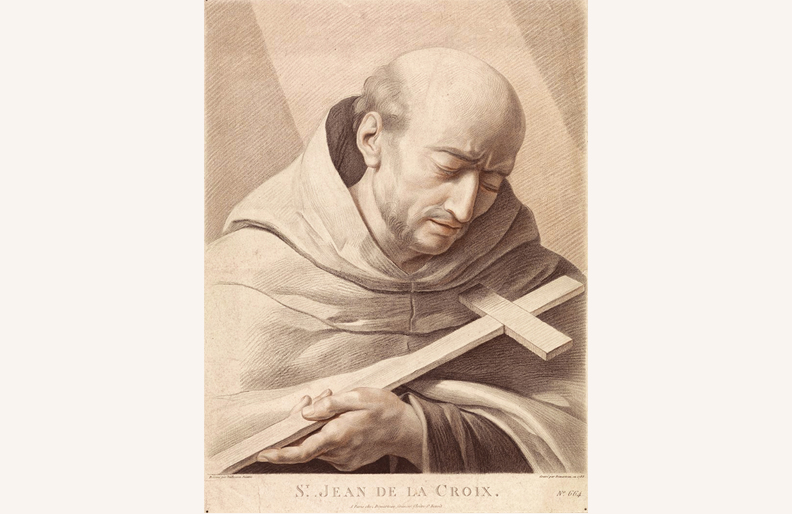
Spiritual Father and Guide
“If the soul is seeking God, its Lord is seeking it much more.”
– St. John of the Cross, Living Flame of Love
Dear Family and Friends of Carmel,
November – shorter days, early sunsets with golden skies, and lingering fall colors, deep and mellow. Garden beds put to rest, roses headed for their long winter’s nap, the German Shepherds growing their heavier winter coats!

But November into December is also a prayerful time – remembrance of the Holy Souls, Carmelite Saints’ celebrations, and Advent’s call to recollection of both past and future – and the end of all things – the purpose of all things.
During the coming days, we celebrate the last of our “great” Carmelite Saints: St. John of the Cross. We call him Our Holy Father, and that he is: a spiritual father of unsurpassed tenderness and compassion for our striving souls.
We know well that many there are who have no attraction to this saint – about this we wrote over 15 years ago in another newsletter. This time, we hope to give a little more reason for people at least not to fear the man – and perhaps to understand him just a little better. To assist us, we present a little book that is another of the excellent republications that are finding their way back into print to the immense benefit of souls. Our old first edition of this book, published in England 1945, actually has the term, “A Wartime Book”. Its author is the well-known E. Allison Peers, who was one of the earlier translators of the works of not only St. John of the Cross, but also Our Holy Mother St. Teresa. Mr. Peers makes a brief, but worthy biography/study of St. John, presenting him as the Saint he was and the Saint he is. For it was the estimation of all who knew him – even those who at one time or another were his opponents – that he was holy: “For myself, during the whole time I knew him,” witnesses a friar some twenty years after his death, “I saw a simple, sincere, unaffected sanctity.”
From Spirit of Flame, readers may learn of why and to what purpose St. John of the Cross lived, wrote, directed souls, made lasting friendships and endured opposition, illness, loneliness – and of course, soared the heights of contemplative prayer to union with God. His direction of souls was probing and sure – full of a compassion and encouragement that made souls soar right up to God.

It is, of course, the writings of the Saint – those writings, both poetry and prose, which are among the greatest and most revered of all Spanish literature – that frighten and frankly turn off many people. The elements of those writings that rub people the wrong way, Peers actually covers in two enlightening chapters called “Stumbling-blocks”. Maybe those who have trouble understanding what St. John of the Cross is all about, by reading these chapters, would have some obstacles pushed aside to soften their positive dislike and mistrust – and have a clearer view. The Saint himself does say that the things he writes about, “if they be not read with the simplicity of the spirit of love and understanding embodied in them, appear to be nonsense.” But are only perfect souls – the “proficient” – able to read with that simplicity of spirit? Peers says:
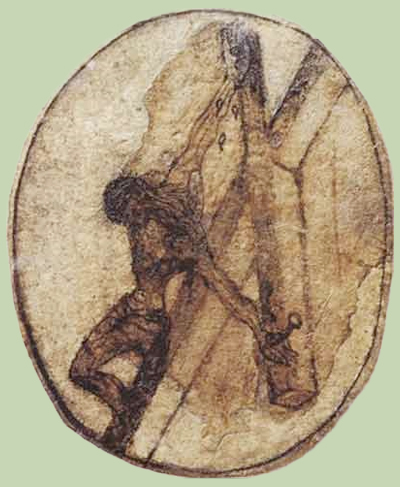
The writings of St. John of the Cross have proved a help and inspiration to countless others who would perhaps not even be called beginners – “ordinary” Christians, living hurried, active lives with little time for more than the barest obligations of their faith, yet evidently finding in these “incomprehensible” and “too subtle” treatises something applicable to their particular needs. What is this something? To what type of Christian, other than the contemplative, does St. John of the Cross appeal? What message, if any, can this sublimest of mystics have for the world of today? …
First, we may say with conviction that to the formal, half-hearted Christian he will make no appeal at all… “We shall not here set down things that are delectable for all spiritual persons who desire to travel toward God by pleasant and delectable ways,” he announces at the opening of the Ascent of Mount Carmel, “but solid and substantial instruction.” Religiosity, spiritual self-indulgence…are displeasing to God. Those for whom he is writing, like those with whom he worked, are not “slothful or delicate souls, still less souls that are lovers of themselves.” His medicine is never emollient or sedative but tonic and astringent – and “delicate souls” reject such medicine, finding it bitter and painful. He sets before us two ways, the easy and the difficult; two ideals, pleasure and effort. We can choose which we like, but, if we choose the easy and pleasant, we are not for him. “It is the most delicate flower,” he warns us, “that soonest withers and loses its fragrance;” and, in another equally apt metaphor, he reminds us that “fruit that is both delicious and lasting is gathered in country that is cold and dry.”
If St. John speaks of self-denial and suffering, is it not simply an echo and amplification of the voice of Jesus Christ? “If anyone come after Me, let him deny himself, take up his cross daily, and follow Me (Luke 9:23 and Matthew 16:24).” If he teaches about “detachment”, is he not merely echoing again the Master when He declares that he who loves self, or family members or friends more than Himself “cannot be My disciple”?
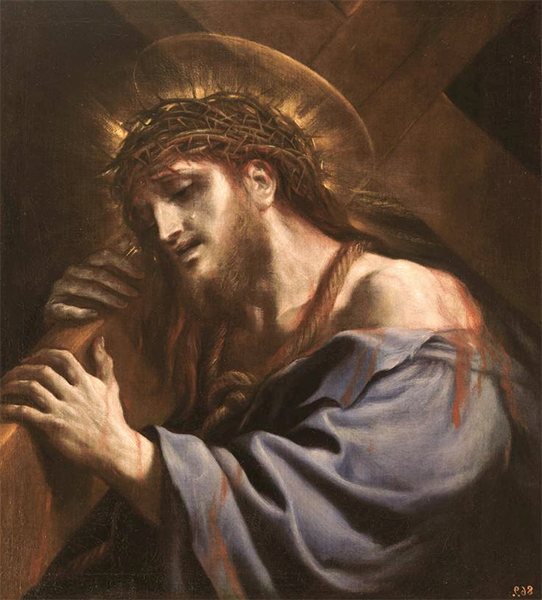
(Luke 14:26) And also St. Paul, writing to the Romans, when he glories in the truth that nothing can and nothing must separate us from God and His love? (8:31-39) As Peers says, reading St. John of the Cross may make us realize, perhaps with a shock, how far our conception of God and living as a Christian has strayed from that which we find in Holy Scripture.
Spirit of Flame, along with Father Gabriel’s Union with God According to St. John of the Cross help to dispel those misconceptions and lead us higher – if only a little bit, and with only a little extra effort – to a richer and truer life with our good God.
Website News
Third Order Carmelites
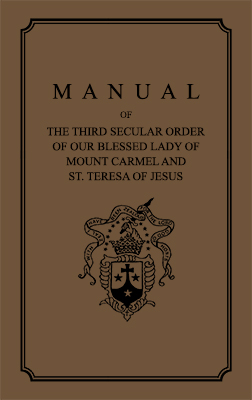
We have good news for all of our Third Order Secular Carmelite friends. At long last, the Manual of the Third Secular Order of Our Blessed Lady of Mount Carmel, so long out of print, will be available. We finally undertook the project ourselves, working with an excellent local printer on the final details. We received a final proof of the book last week and are pleased to be offering this valuable resource once again for those keenly interested in the Carmelite life and spirituality lived in secular life. This 1950 edition reprint includes The Rule, details about admission and formation, prayers, ceremonies, customs and much more. The book should be completed by early December, but we are taking pre-orders now.
After many requests and complaints of how hard they are to find, we are also making available again our Third Order Scapulars.
The Advent Liturgy
We find ourselves once again on the brink of a new Liturgical year, with the season of Advent almost upon us. The Church, the Mother of our souls, teaches and sanctifies her children first and foremost through the Holy Liturgy. It is true that each year renews for us the moments of Christ’s life and the story of Redemption, bringing to the present those graces for each of our souls and our spiritual needs. But the liturgical year might also be viewed from another point of view – as the journey of a soul in the spiritual life. From the moment of first conversion, through the various purifications and stages of prayer, leading to complete and perfect union with God at Pentecost, if perfectly lived, the Liturgical cycle is meant to make us saints. Alas, most of us don’t live it perfectly! So year after year, the Church gives us the same pattern to follow, the same seasons, the same feasts, that we may draw from the inexhaustible graces so abundantly given. The goal: deeper penetration of the liturgy’s worship and precious lessons into our souls. God wills to do this and, being all-powerful, can do this with our generous cooperation – year by year, day by day.
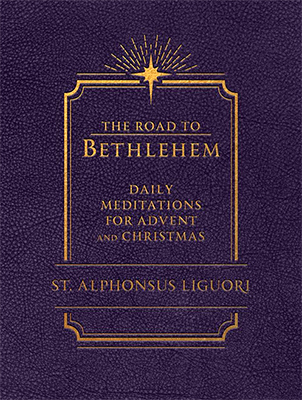
Few saints have written with such passion, depth, and simplicity on the incarnation and nativity of Christ as Saint Alphonsus Liguori. In this book, he is your guide on a daily prayerful pilgrimage from the start of Advent through the birth of our Lord to the Epiphany. Drawing on Sacred Scripture and his profound saintly counsel, St. Alphonsus takes you into the details of Christ’s birth for prayerful reflection that will have your imagination placing you at the feet of our Infant Lord. The contents of these meditations are marked by both joy for the birth of Our Lord and sorrow for what we know He will suffer for our salvation.
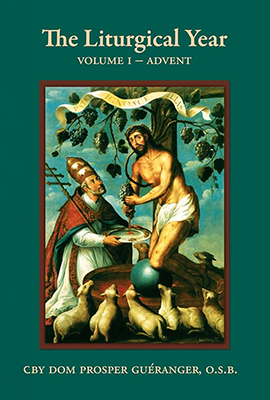
In these volumes, written with the heart of a seraphic contemplative, Abbot Dom Guéranger takes the reader on a daily spiritual pilgrimage through the liturgy of the Church. Each day begins with a rich and provocative meditation on the mystery of faith to be celebrated, along with historical information and other Liturgical texts. It is a priceless treasure for understanding and increasing your knowledge of the Church’s history and Liturgical life. Such was the way in which the father of Saint Therese of Lisieux used these volumes. It was a daily routine in the Martin home to read from them to his five daughters.
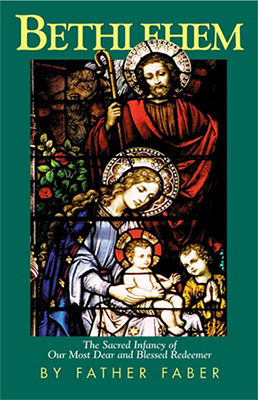
Initially an Anglican priest, Father Faber made his way into the Catholic Church through the preaching of Cardinal Newman and the Oxford movement. In Bethlehem, Fr. Faber explores the hidden meanings of Our Lord’s Incarnation, birth, infancy, and early life, based on the Four Gospels’ accounts. Whatever Jesus did or allowed Himself to undergo is utterly perfect, because every action He, God, takes is perfect. Fr. Faber explores the hidden meanings of Our Lord’s earthly life, exposing with profundity and clarity the mysteries of Christ’s life.
About the season of Advent, we have written at length in past newsletters, but let us emphasize this year that it is primarily the season of longing and desire for God. It is the season in which we recognize – with peace of soul – our weakness, our misery, and our great need for conversion in the face of the coming Judgment. Whether we are coming to the Church for the first time, or have lived as Catholics for many years – we all deeply need conversion – and ongoing conversion. All through life, the effects of sin plague our steps. We cannot but sense our frailty in the constant struggle to live a simple Christian life. Relentlessly faced with our failures and infidelities and the compromises we have made with a pagan world, we must acknowledge that need for radical conversion to Christ. We must humbly admit that we are nothing without Him – and that we need His help!
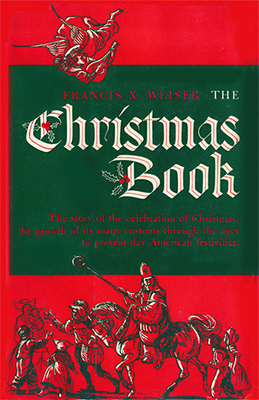
This popular book unfolds the story of the celebration of Christmas across the world. Readers will discover who introduced the Christmas tree to America, and when candles in the window first became a familiar sight. These, and many more hitherto little-known facts about Christmas, will be found in this tender, inspiring, and informative book. The Christmas Book combines scholarship and humor, imparting through its pages a contagious appreciation of the true Christmas spirit.
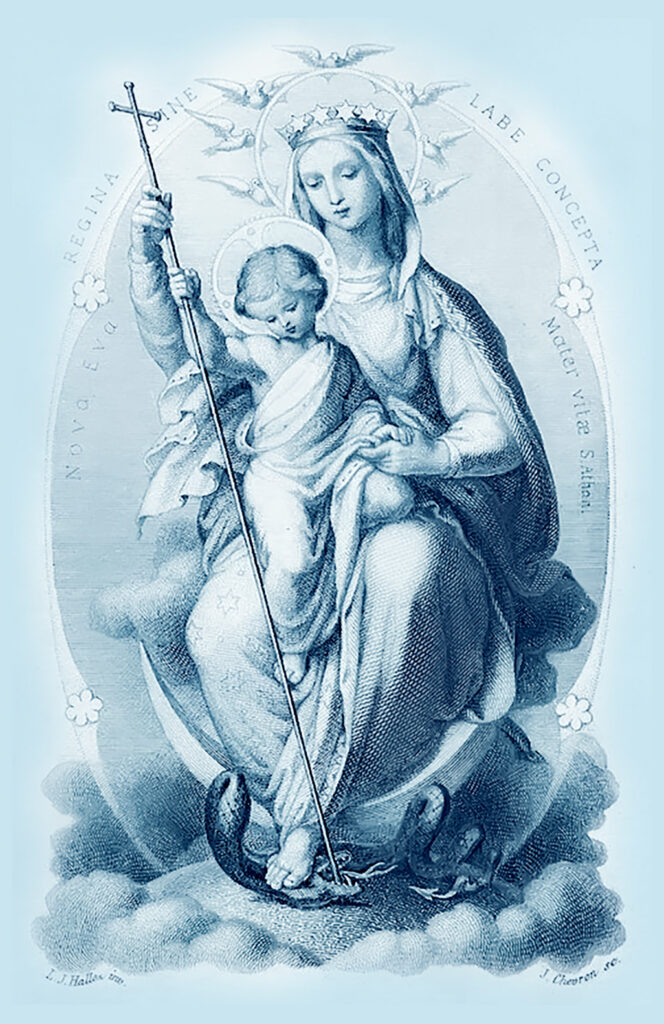
In the Advent Liturgy who is our primary teacher, our primary guide? None other than Our Blessed Mother. She was an intimate part, by God’s design, in the Incarnation and Redemption – she through whom Christ came into the world and continues to come into the world, Christ’s Mother and our Mother, Co-Redemptrix, and Mediatrix of all Graces. These titles of Our Lady have been taught, defended, and explained by Popes, Theologians, and Saints since the earliest days of the Church. And considering the recent discussion surrounding them, we thought to offer you this sermon given to our community several years ago on the Feast of the Seven Sorrows (September 15th), which is all the more relevant today.
Centuries of Catholic culture and customs have been the means of carrying the lessons and spirit of the Liturgy from the Churches into our homes. This is especially the case with Christmas. Although many have become “re-paganized” and commercialized, most of the customs we keep today (alas often unknowingly) have Christian roots.
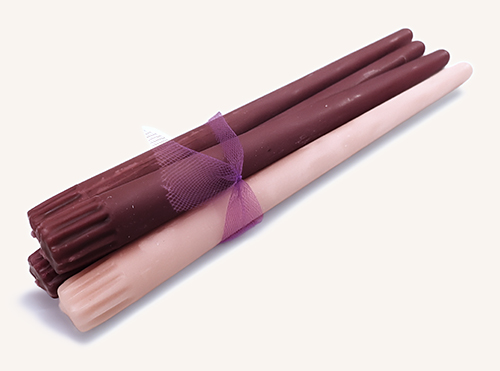
One such custom for Advent is the Advent wreath, about which we have spoken often in the past. Families often use the wreath at the dinner table. Here in Carmel, we light the wreath for all of the Hours of the Divine Office. If you have never heard of the Advent wreath,we encourage you to learn more, and for those of you who already have wreathes, don’t forget to get your supply of Advent candles before the first Sunday of Advent.
O Antiphon Ornaments
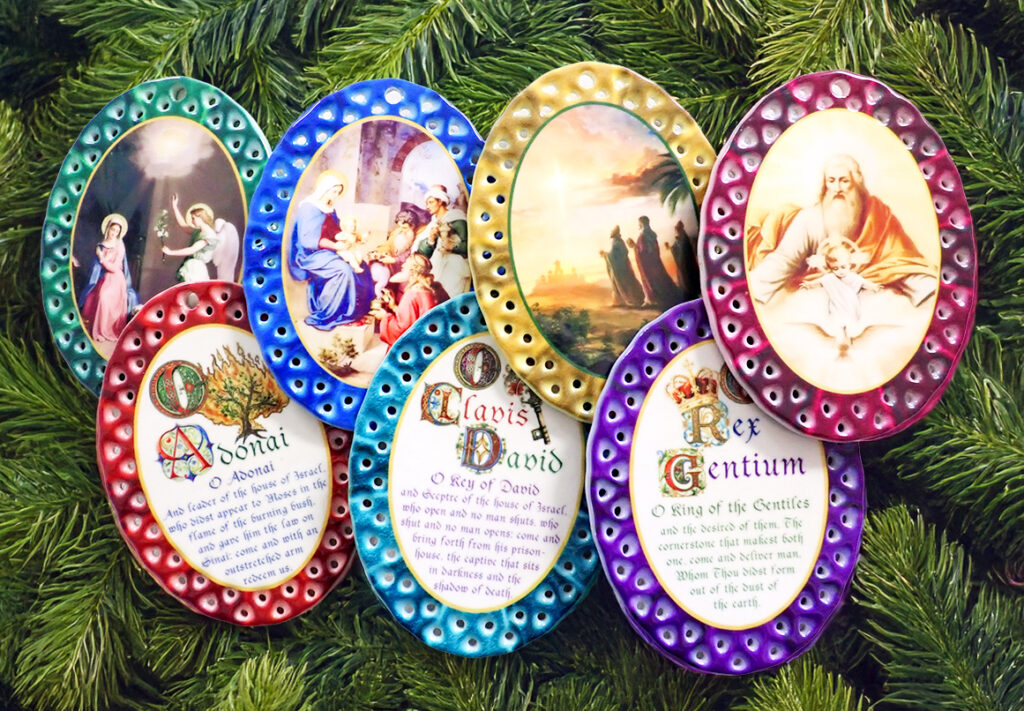
The Christmas tree is another practice rooted in Catholicism, though many who use it don’t understand its origin and symbolism. Last year, we started a series of ornaments centered around the “O Antiphons.” These ancient prayers are part of the Liturgy and Divine Office: the Vespers Magnificat antiphons during the final seven days leading up to Christmas. Their sublime, prophetic texts encapsulate all the doctrine and sentiments of the Advent season. They are heartfelt cries for the coming of the Redeemer.
This year we finalized the design for ornaments with the last four antiphons, so you can add to the set you started last year or buy the entire set at once. We were edified to hear from a few people/families who told us that they started a new custom in their own homes of hanging each ornament and praying each antiphon together as a family: a novena in the days leading up to Christmas. This, of course, is tradition at work and in the making – a perfect example of how customs begin in the smallest ways and become “traditional”! However you choose to use these ornaments, we hope they will inspire devotion and the sentiments of the season, which is what every good Catholic custom should do!
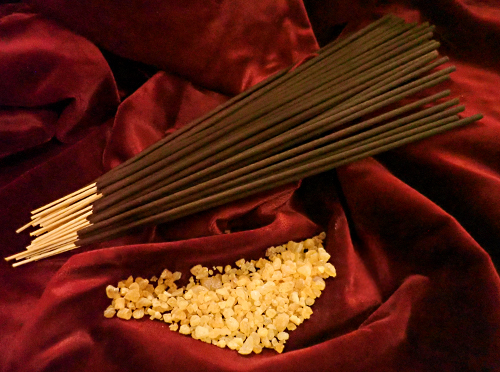
Frankincense could arguably be called the most “famous” incense of all time, and the first scent that many people think of when they think of incense. Upon God’s command, it was a key ingredient of the incense burned by the Jews in the Old Testament, symbolizing divine worship and prayer. When the Magi offered the Holy Infant frankincense as one of their gifts, it was a symbol of His priesthood and divinity. Our Three Kings incense is a blend in honor of the gifts of the Magi and contains Frankincense. However, since we have had more than one request for an incense made of frankincense alone, we now can offer it to you – just in time for the Christmas season.
New Products

We chose a few of our favorite floral scents for a new style of candle on our website. They come in small tins, compact and easy to burn, but smaller than the larger white tin candles we offered in the past. We have also added a few new items to our site for Christmas celebration and decoration; they also make great gifts.
New Christmas Music
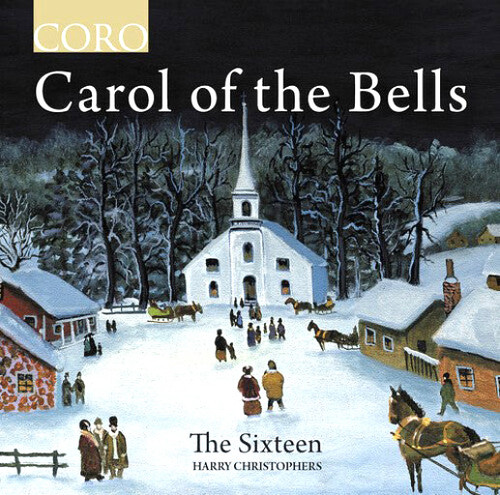
Our goal always being to bring you the beauties of doctrine and liturgy, we cannot omit one of God’s ways of expressing them: music. This year, we welcome a few Christmas music recordings new to our website that convey the Christmas mysteries in joyous and prayerful fashion. Of note is Carol of the Bells, and its Advent Antiphons – a choral setting of the Great O Antiphons, in which echoes of Gregorian chant combine with richly expressive harmony.
New Christmas Cards
Community News
Since our June newsletter was the last time we shared community news, we must include a bit of it now, a good five months later! Time passes so quickly, and it was a busy summer here at Carmel.
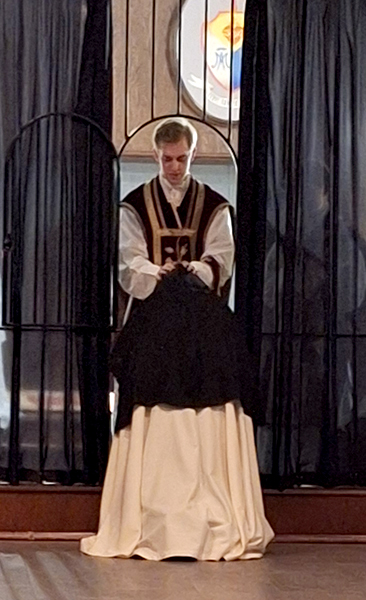
The focal point of the summer was the Priestly Ordination ceremony that was held at our chapel at the end of June. To see Christ impose the character of Ordination, in one moment transforming them from ordinary men into priests of God, was a tremendous privilege, and one not often granted to Carmelites. Our Holy Mother St. Teresa wanted us to pray especially for priests and in this way to assist them in the all-important work – the salvation of souls. We received the new priests’ first blessing with great joy, attended their first Masses and give great thanksgiving to God for granting to His Church two more ministers of His grace.
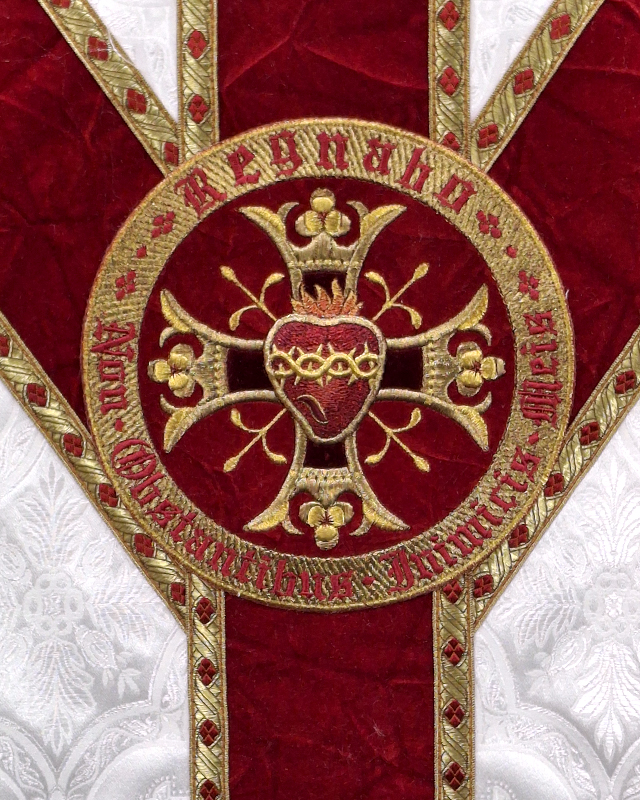
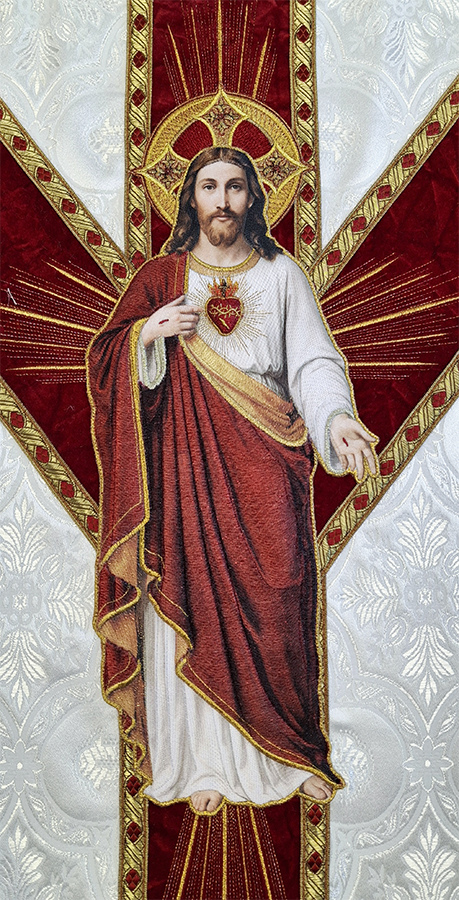
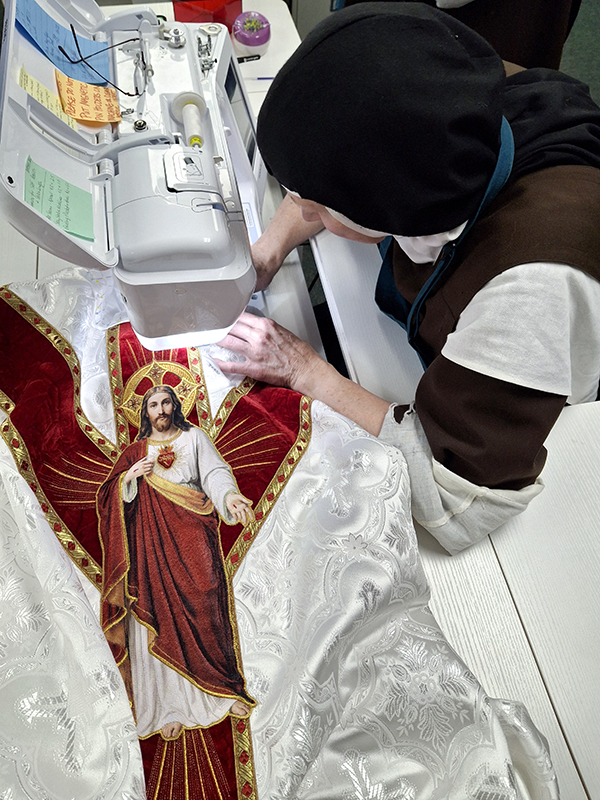
Shortly afterwards, came the 30th Ordination Anniversary of three of our other priests. We marked the occasion with a special gift vestment dedicated to the Sacred Heart of Jesus. It is meant to be a simple, daily vestment set – but as always, we had a hard time with the “simple” part. It is never easy for us to restrict to the plain and ordinary when it comes to designing vestments for the liturgy! We chose a full figure of Our Lord to adorn the back of the vestment. On the front, we placed an embroidered 3-D image of the Sacred Heart with the words of Our Lord to St. Margaret Mary: “I will reign, despite my enemies.” These words summarized all of our thoughts and sentiments on this great occasion, as we celebrated 30 years of courageous fidelity to the holy priesthood in a world that works so hard against Christ and His Church. The Kingship of Christ found its way into the design: we adorned all of the crosses with gold crowns and red gems.

The celebrating was not over! July 16th was not only our Patronal Feast of Our Lady of Mount Carmel, but the added joy this year of 25th silver jubilee of one of our own Sisters.

The gardens. Everyone asks us about the gardens! As we mentioned in June, we made the big (and wise) transition to raised beds. No gopher touched our produce this year. They now only have access to a very robust patch of rhubarb – and they despise rhubarb. The first frost has come and gone, putting a definitive end to the gardens and sparing only what plants we could squeeze into the green house. The large potato plants that had dominated one of the raised beds gave us quite a few meals with young potatoes – the best way to have them. Tomatoes made delicious Mexican and Italian sauces and a few good bowls of chili. Apples had to be harvested a little early, since robins and squirrels were pecking away at them, and the first frost might have ruined the crop. But they were plentiful and really not too tart at all – with many still mellowing as they ripen. We have been having Sister Cook’s outstanding apple butter, fresh apple juice, apple bars, apple crisp, apple pie, apple salad, and just about any other thing apple that you can think of. Like most people, our zucchini plants thrived and produced in over abundance. Undaunted, we found ways to use every zucchini that came our way – zucchini pancake fritters were probably the favorite recipe.

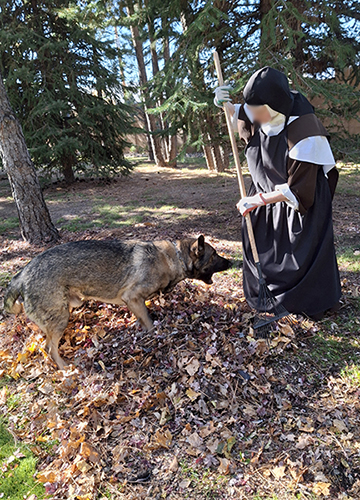
An exercise in patience and perseverance – raking with a German Shepherd
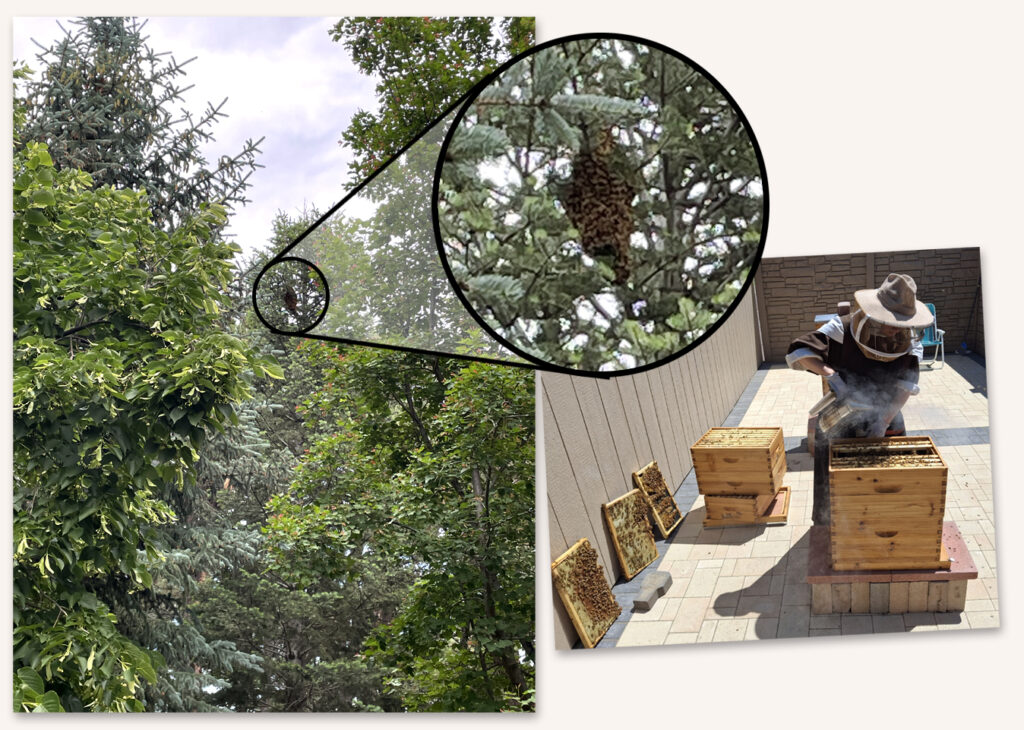
We also harvested honey from our first beehive. Some of you may remember from our last newsletter that we started a second hive earlier this year. Both hives are thriving! So well are they doing, in fact, that the first hive swarmed in mid-summer. Queen Clotilde took hundreds of thousands of bees with her (the sound of all those bees leaving at once was quite amazing!) and settled high in a pine tree on the grounds. This left the first hive with a vacant throne, and the battle for power that ensued was reminiscent of the historic War of the Roses.
Queen Clotilde had left behind an heir, but she was young and inexperienced, and Sister Beekeeper mistook her ineptitude to mean that there was no Queen. Some weeks later, we obtained a new queen, naming her Queen Alice. The hive accepted her with enthusiasm. The un-named adolescent Queen was expelled (the first we knew of her existence) with her few loyal followers, and peace seemed to have been restored.
However, what was our surprise to find Queen Alice dead outside the hive just a few months later! Whether she was old or the victim of a revolt we do not know, but the worker bees had prepared for her demise. The new queen (dubbed Queen Olga) took power effortlessly.
Now, all of this drama will be perhaps unintelligible to most people (as it was to us not so very long ago), but to anyone who knows a bit about beekeeping, every detail of the saga will be crystal clear. Learning all about the life of the bees inside the hive and of the thousands of intricacies and beautiful details that God put into some of the very smallest of his creations has been a fascinating, rewarding adventure for us. Meanwhile, as we wait to see how they fare this winter, we are enjoying the delicious harvest of golden honey!
One of our recent newsletters with the story behind our new Our Lady of Fatima relic badges brought an onslaught of relic badge orders, far more than expected. In fact, we are still working to catch up! We were so pleased to see such a devotion to Our Lady of Fatima with her important apparition and crucial message for our times.
The website is always busy, but this time of year it is especially so in the days leading up to Christmas. We ship hundreds of Sacramentals world-wide, and sometimes we hear a story back about one of our scapulars or rosaries that is a testament to the great power and grace of God.
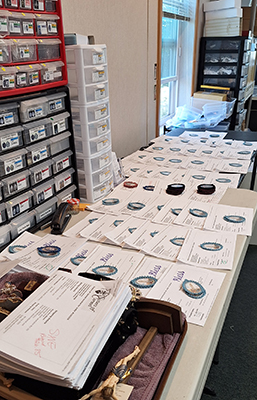
A batch of Fatima relic badges ready to be shipped
One example is our dear nurse friend from across the country, who orders scapulars and badges for her dying hospice patients and has made sure that many a lapsed Catholic meet death clothed once again in Our Lady’s garment through her example and encouragement. Again, we had a new convert write us recently, saying that at a very dark time in his life, he bought a rosary from us, not even sure what it was or how to pray it. As a Muslim, through Our Lady, he was brought to the Faith and went to the baptismal font holding that same rosary.
Some relatives of one of our Sisters lost everything in a house fire – everything that is, except for the dresser which had one of our scapulars sitting on top of it. The dresser, its contents – and of course the scapular – survived the fire, completely unscathed.
Lastly, another dear friend of our Carmel sent us an urgent plea for prayers – he was in a hospital in another state and was suffering during the height of COVID, just before Christmas, 2021. He had been away from his Catholic faith for a long time, but still believed, as shown and even spoken numerous times to us in our work and contacts with him over the previous years. And now, he urgently wanted any help that we could send him. It was impossible to arrange for a priest (this was during the lock-downs), but we Express-shipped to him some blessed Sacramentals, including a crucifix with the happy death indulgence, Our Lady’s scapular, etc. They were held up at the post office, and we made a call to see if there was anything that could be done. The man who delivered to that particular hospital just happened to be in the same room as the person who answered the phone at the Post Office, all according to Divine Providence. He took our package and delivered it within the hour. The nurse attending him was in touch with us, and we asked her to place the crucifix in his hand and the scapular on his heart. A few hours later, he passed away.
So many more stories could we share! Stories of faith, of persecution, of struggle….and of little daily miracles. Where sin abounds, grace more abounds! Where there is the cross, there is also Redemption. To quote St. John of the Cross once again: “When you are burdened, you are close to God, your strength, who abides with the afflicted. When you are relieved of the burden you are close to yourself, your own weakness; for virtue and strength of soul grow and are confirmed in the trials of patience.”
So with the approach of Advent, and as we meditate on our weaknesses and great need, let us stir up that desire for the coming of Our Redeemer, not only at Christmas, but each hour of each day – until His Final Coming. Let us rely on Him, and on His Mother Co-Redemptrix and Mediatrix of all Grace, as our only strength and hope!
In Him Who is our Life and in her who is Our Mother,
Your Carmelite Sisters
The Need To Cultivate Hope
Excerpt from Union with God According to St. John of the Cross
by Father Gabriel of St. Mary Magdalen, OCD
“Yes, in our life we need to make ample room for the desire for God. We need to cultivate this aspiration and also nurture in our heart the solicitude for the things necessary to attain possession of God. We also need to nourish a great trust in Him who in His goodness and mercy wants to help us realize our hope….Sin is an obstacle to a holy life; I must therefore have faith that, if I am sorry, the Lord will remove the obstacle to my holiness. That is not all; after the negative side there is the positive side. He will take away the obstacle and positively give me help, “the grace to live a good life,” to live according to my condition, according to my vocation, but a truly good life, morally good and therefore holy. The Lord wants me to trust in His help so that I may become holy.
O yes, the Lord wants me to be certain of this! It is not a matter of intellectual certainty, but of a certainty of heart, namely that confidence which makes one say to someone: “I put my trust in you.” Theology teaches that such trust is the very characteristic of perfect hope…
It is easy to see that in cultivating this sense of certainty about the divine aid, in order to attain the Highest Good, we must become in some way strong with the very strength of God who, we know, wants to help us. When it is a question of possessing Him, the trust of a soul of good will can be sublime. St. John of the Cross has given us in this regard the maxim that St. Therese of the Child Jesus loved to repeat: “We obtain from God as much as we hope from Him.”